Phil Ivey's WSOP Texas Hold'em Bluff Breakdown
Phil Ivey, a poker legend, faced a tough loss at the WSOP Main Event. This hand analysis reveals the critical moments that led to his downfall, demonstrating the inherent risks and strategic complexities within high-stakes poker, especially when attempting a wsop texas hold'em bluff.
The Hand Breakdown: Ivey's Pocket Threes
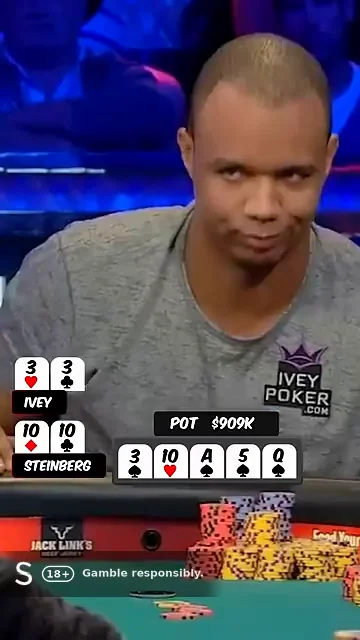
The hand began with Phil Ivey holding pocket threes, a hand he chose to raise. Okelola responded by calling with Ace-Queen, and Steinberg entered the fray with pocket tens. The flop revealed 3-10-Ace. This board immediately created significant potential for strong hands: Ivey secured a set of threes, while Steinberg achieved a set of tens.
The Turn and River: A Decisive Queen
The turn card was a five, a card that offered no immediate improvement for Ivey's hand. The river brought a queen. This final card proved decisive, as it gave Okelola a pair of queens. However, it was Steinberg who ultimately claimed the pot. With his pocket tens, Steinberg now held three of a kind (tens), which was a higher-ranking hand than Ivey's set of threes and Okelola's pair of queens.
Ivey's aggressive pre-flop strategy, while often effective, backfired in this instance as Steinberg's pocket tens held up to secure the win. This hand serves as a potent illustration of poker's unpredictable nature and the critical importance of opponent assessment. The game referenced, WSOP, is a popular poker variant known for its strategic depth.
Understanding Texas Hold'em Mechanics and Bluffing
This scenario unfolded within the context of Texas Hold'em, a poker game where players aim to form the best five-card hand using a combination of their two private "hole" cards and five community cards. The game features a structured betting process across multiple rounds. Key to Texas Hold'em is understanding hand rankings, from high card to royal flush, and the strategic implications of position at the table and opponent tendencies. Bluffing, as suggested by the tags, is a core element, allowing players to win pots even with weaker hands by convincing opponents they hold something stronger. This clip showcases a moment where a potential bluff didn't pay off, highlighting the fine line between calculated risk and costly error.
When a WSOP Texas Hold'em Bluff Fails
While bluffing is integral to poker, this particular round demonstrates the risks involved. Ivey's initial raise with pocket threes, while a strong starting hand that improved on the flop, couldn't withstand Steinberg's even stronger set. A successful bluff relies on several factors: the perceived strength of your hand, your opponent's tendencies, and the texture of the board. In this instance, the board developing into a stronger hand for Steinberg meant Ivey's position, despite his set, was ultimately weaker, making a bluff or even continued aggression a high-risk play.
Game Context: WSOP Digital Experience
The WSOP game itself is a digital representation of the classic poker experience. It typically offers features designed to enhance gameplay, such as the potential for Free Spins, Multipliers that increase winnings, a Tumble Feature where winning symbols disappear and are replaced, and a Bonus Buy option allowing direct access to special rounds. This particular game is noted for its High volatility, meaning wins may be less frequent but potentially larger when they occur. It also boasts a theoretical Return to Player (RTP) of 96.20% and a maximum win potential of 5000 times the bet. Bets can range from a minimum of 0.20 to a maximum of 100, offering flexibility for different player budgets. Responsible gambling practices are essential when engaging with any casino game.
Strategic Depth in WSOP Texas Hold'em
Beyond the specific outcome of this hand, the clip underscores the complex decision-making involved in WSOP Texas Hold'em. Players must constantly evaluate their hand strength, their opponents' likely holdings, and the evolving board. This dynamic environment is what makes poker so compelling, demanding both mathematical understanding and psychological insight. Every decision, from pre-flop raises to river calls, carries significant weight and can dramatically alter the course of a round, as seen in Ivey's encounter with Steinberg.