Can Roulette Strategy Prediction Lead to a Win?
This video dives into the intriguing world of roulette, exploring whether predicting the outcome is truly possible. Learn about gamblers who've attempted to crack the code and the countermeasures casinos have implemented to maintain the game's randomness. The core question is: can a roulette strategy prediction genuinely give you an edge?
Breaking Down the Win in Roulette
The video highlights attempts to predict roulette outcomes, referencing players who reportedly won substantial amounts using prediction techniques. These strategies often involved meticulous analysis of wheel behavior and ball movement. By observing subtle imperfections or biases in the wheel, or the physics of the ball's trajectory, some players believed they could gain a statistical edge over the house. This approach predates many modern casino security measures.
However, casinos have long been aware of such predictive methods and have implemented significant countermeasures. Modern roulette wheels are designed with features intended to promote unpredictable ball behavior, making it exceedingly difficult for players to gain any advantage through observation alone. This ongoing evolution represents a constant arms race between players seeking an edge and casinos striving to maintain the inherent randomness of the game.
Casino Countermeasures and the Ongoing Arms Race
The pursuit of predicting roulette outcomes continues even in the face of advanced casino security. Some modern predictive players utilize sophisticated software and technology to track the ball and rotor. By gathering data on their movements, these systems attempt to calculate potential landing zones for the ball. This technological approach represents a new frontier in the long-standing battle for predictability in roulette.
Despite these efforts, roulette remains a captivating game due to its blend of chance and the enduring human desire to find patterns and predict outcomes. Developed by Various providers, roulette continues to be a popular choice in casinos worldwide, offering a dynamic experience for players who enjoy the thrill of the spin and the potential for a significant win.
Understanding the 111-Second Round
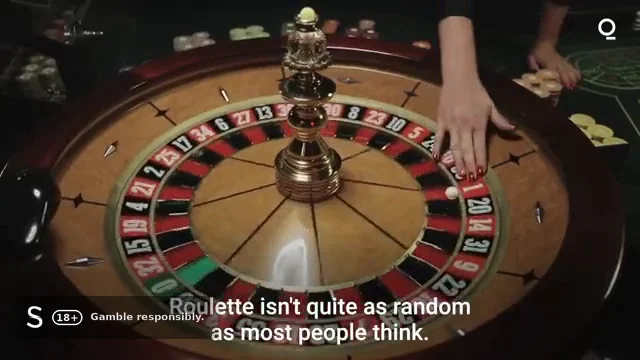
This specific video captures a full roulette round lasting 111 seconds, culminating in a win. While the clip itself doesn't detail the strategy used by the player, it serves as a potent illustration of the game's inherent unpredictability and the immediate gratification of a successful bet. Many players are drawn to the game hoping to find a pattern or a winning roulette strategy prediction that can replicate such outcomes consistently.
Historical Context of Roulette Prediction Attempts
From Joseph Jagger in Monte Carlo in the 1870s, who exploited a biased wheel, to more recent attempts using advanced physics and technology, the desire to predict roulette outcomes is as old as the game itself. These historical figures and modern innovators all share the common goal of trying to find an exploitable weakness in the system, turning a game of chance into one of skill and foresight. Their stories often fuel the curiosity around whether a true roulette strategy prediction is an attainable goal.
Why True Prediction Remains Elusive
Modern roulette wheels are engineered with precision to eliminate biases, and casino protocols are designed to ensure fairness and randomness. Factors like the wheel's rotation speed, the ball's launch velocity, and the diamond deflectors all contribute to making each spin a unique event. Even with advanced technology, the sheer number of variables makes a consistently accurate roulette strategy prediction incredibly difficult, bordering on impossible, in a regulated casino environment.
It is important to play responsibly. Roulette is a game of chance, and outcomes cannot be guaranteed. Always gamble within your means and seek help if you feel you may have a problem.